
The marketer’s guide to writing for technical audiences (without a CS degree)
The Product Hunt Launch that flopped
I thought writing a product launch for a technical audience would take me a few hours—turns out, I was very wrong.
When I worked on a Product Hunt launch for a developer-focused tool, I found that my usual marketing instincts weren’t working. I was excited about the product, but excitement alone didn’t matter. What did it do? How did it work? Why should developers care?
Massimiliano Fattorusso from that team helped me understand where I went wrong. He didn’t rewrite my copy for me—he asked questions. Questions that made me rethink how I structured messaging for a technical audience. He emphasized that it wasn’t about making big, sweeping claims or hyping up the launch, it was about clear, precise communication:
- What is it?
- What does it do?
- How does it work?
- What do other people say it did for them?
That experience taught me a lot, and since then, I’ve spent time building a foundation for writing for technical audiences. This cheat sheet is what I wish I had back then.

What I Learned: How to Market to Developers, IT Pros, and Engineers
Why traditional marketing tactics don’t always work
Here’s what I learned the hard way and what I now apply when marketing to developers, IT admins, and other technical audiences. Technical audiences, while human like the rest of us, have a different approach to evaluating if a tool, product, or service works for them. We can appeal to emotion AND we need to talk to their logical brain. That is the brain they are in when at work. Their decision-making process relies heavily on functionality, efficiency, and proof, so effective communication needs to be clear, data-driven, and focused on problem-solving rather than aspirational storytelling.
Cheat Sheet: How to write for technical audiences
| Ineffective | Effective |
|---|---|
| Marketing fluff & buzzwords | Technical, straightforward explanations |
| Long-winded intros | Concise, action-focused content |
| Over-promising features | Proof: real use cases, benchmarks, technical specs |
| Basic 101-level content | Deep dives, troubleshooting guides, security best practices |
| Sales-driven messaging | Developer-friendly documentation, case studies, API examples |
Best practices for writing to technical audiences (with examples)
When communicating with technical professionals like developers, IT admins, and engineers, clarity and accuracy matter more than marketing fluff. The key is to speak their language, get to the point, show proof, and provide actionable insights. Below is a structured approach to ensure your messaging resonates.
1. Speak their language – be precise and avoid hype
Best Practice: Use straightforward, technical explanations rather than grandiose marketing claims.
Don’t: Use vague buzzwords and over-the-top excitement.
❌ Marketing-heavy pitch:
“Our platform is an all-in-one cloud solution that revolutionizes security!”
Why This Doesn’t Work:
- Vague and Overhyped – Claims like “all-in-one” and “revolutionizes security” are broad and unsubstantiated.
- No Proof – What makes it revolutionary? Where’s the data?
- Lack of Clarity – Technical audiences need to know exactly what the product does.
Do: Stick to clear, direct descriptions of what the product does.
✅ Technical, clear message:
“Our platform provides centralized identity management, replacing legacy solutions like Active Directory with a secure cloud-based alternative.”
Why This Works:
- Specific and Actionable – Clearly states what the platform does.
- Addresses a Real Need – Highlights replacing a legacy system.
- No Hype, Just Facts – Avoids marketing fluff and sticks to functionality.
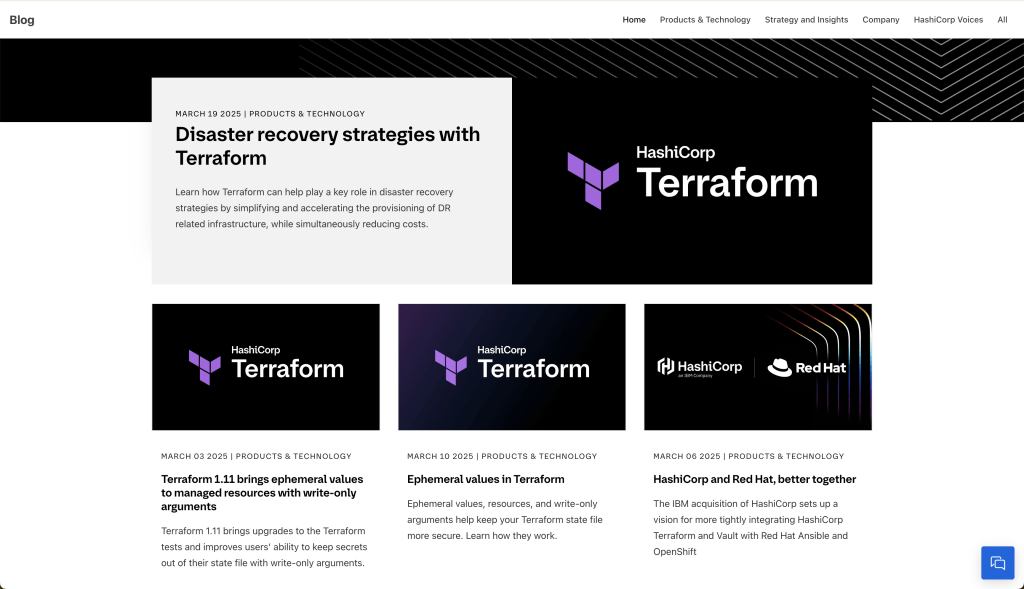
HashiCorp, an software company, does this well. They provide tools and products for automating and securing multi-cloud and hybrid environments, with a focus on infrastructure lifecycle management and security lifecycle management. By focusing on infrastructure-as-code principles with clear, technical explanations and no unnecessary fluff, they effectively reach their technical audiences without making grandiose claims.

2. Get to the point quickly
Best Practice: Cut the long-winded introductions and state the value immediately.
Don’t: Start with broad industry trends or problems that your audience already understands.
❌ Fluff-filled intro:
“Companies today are facing security challenges like never before, which is why identity management is more important than ever…”
Why This Doesn’t Work:
- Too Generic – Every company faces security challenges, but this doesn’t add value.
- Delayed Value Proposition – Readers have to sift through fluff before getting to the key point.
- Unnecessary Setup – The audience likely already knows the problem.
Do: Quickly define the solution and how it fits into their workflow.
✅ Straightforward statement:
“Our software integrates with existing IT environments, offering seamless user authentication, role-based access, and compliance tracking—all in a single dashboard.”
Why This Works:
- Clear and Concise – Directly explains what the software does.
- Eliminates Extra Steps – Doesn’t waste time on unnecessary context.
- Addresses Pain Points Immediately – Technical audiences get straight to the solution.
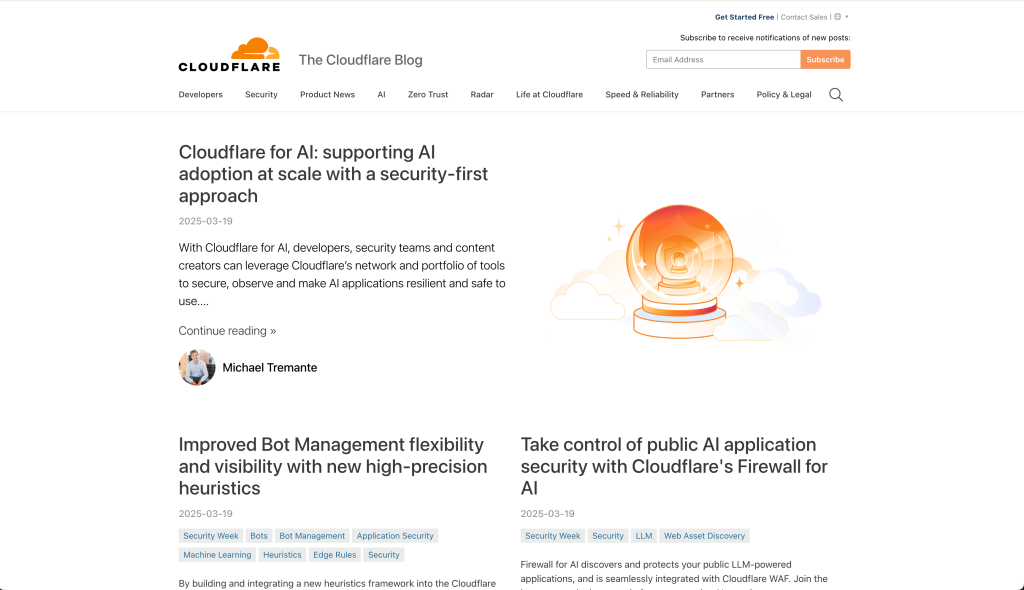
Cloudflare, an web infrastructure and security company, is excellent at getting to the point in their product messaging. They provide content delivery network (CDN) services, DDoS mitigation, internet security, and domain name system (DNS) management. Their blog posts and documentation provide immediate value with problem-solution framing, helping developers and IT teams quickly understand how Cloudflare’s products solve performance and security challenges.
3. Show Proof & Data
Best Practice: Developers and IT professionals trust numbers, benchmarks, and real-world case studies over vague claims.
Don’t: Make exaggerated or unsubstantiated statements.
❌ Exaggerated and unsubstantiated:
“Our platform delivers unparalleled speed and efficiency, making it the best solution for IT teams.”
Why This Doesn’t Work:
- No Measurable Data – What does “unparalleled speed” mean?
- Overly Broad Statement – Claims to be “the best,” but doesn’t back it up.
- Lacks Competitive Context – Faster than what? By how much?
Do: Provide actual data and customer results.
✅ Data-Backed Statement: “IT teams using our platform reduce manual user provisioning by 40% and cut helpdesk tickets related to login issues by 60%.”
Why This Works:
- Provides Measurable Benefits – 40% reduction is concrete.
- Directly Relevant to Users – IT teams care about reducing workload.
- Builds Credibility – Shows real-world impact, not just marketing claims.
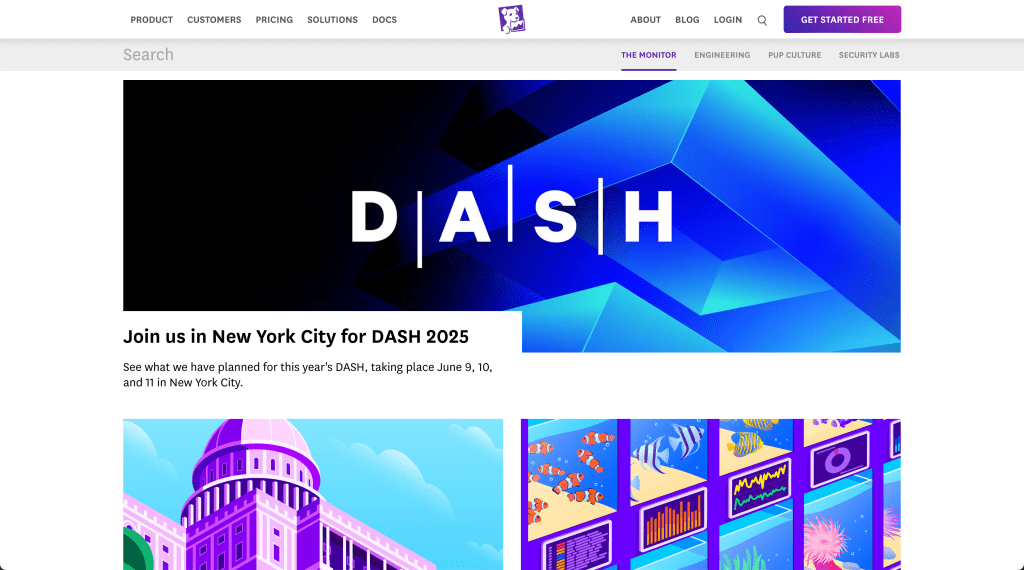
Datadog, a monitoring and security platform for cloud applications, does this effectively by showcasing performance benchmarks and real-world metrics. Their platform provides infrastructure monitoring, application performance monitoring (APM), log management, and security monitoring, making it a critical tool for DevOps and IT teams. Datadog uses precise, data-backed messaging to highlight how its observability tools reduce downtime and improve system performance.

4. Use real-world scenarios: make it tangible
Best Practice: Frame messaging around actual use cases and challenges technical users face.
Don’t: Keep messaging abstract or overly theoretical.
❌ Abstract Statement: “Our product improves IT operations, making businesses more efficient.”
Why This Doesn’t Work:
- Too Vague – What kind of IT operations? What kind of efficiency?
- Lacks Real-World Context – No mention of who benefits or how.
- No Practical Application – Leaves readers unsure how it applies to them.
Do: Provide actual data and customer results.
✅ Scenario-Based Messaging:
“Managing a hybrid environment? Our platform unifies Windows, macOS, and Linux device management in one place, with security policies you can enforce across all endpoints.”
Why This Works:
- Speaks Directly to Users’ Needs – Addresses common problems they face.
- Clearly Defines the Use Case – Provides a relatable scenario.
- Practical, Actionable, and Useful – Helps users envision how they would apply it.
Twilio, a cloud communications platform, uses customer case studies and real-world applications to demonstrate how companies leverage their APIs for communications at scale. Twilio provides programmable voice, text, video, and email services, enabling businesses to integrate robust communication capabilities into their applications. Their technical documentation and case studies showcase real implementations, making it easier for developers to see how Twilio fits into their workflow.


5. Offer actionable takeaways: Guide them to next steps
Best Practice: Provide step-by-step instructions or clear calls to action.
Don’t: Leave the reader unsure of what to do next.
❌ Missed Opportunity: “Learn more about our platform by visiting our website.”
Why This Doesn’t Work:
- Too Generic – Doesn’t tell them what to look for.
- No Direction – What should they do once they get there?
- Lacks Clear Value – Doesn’t explain why they should care.
Do: Provide clear, structured steps and guides that help users take immediate action.
✅ Actionable Content:
“Here’s a step-by-step guide to migrating from Active Directory to our cloud directory in 3 simple steps.”
Why This Works:
- Gives a Clear Next Step – Users know what to do.
- Reduces Friction – Guides them to a resource they can use.
- Provides Immediate Value – Helps them achieve a goal.
Atlassian, a software company known for products like Jira, Confluence, and Bitbucket, provides extensive documentation and how-to guides that are deeply technical, ensuring their users can take immediate action. Their tools help teams with software development, project management, and collaboration, and their approach to technical content makes complex workflows easier to understand and implement for engineering and IT teams.


How to structure marketing copy for developers & IT teams
When marketing to a technical audience, you have to put on your teacher hat because writing for technical audiences is like a science presentation, not a story hour.
My hack is to think of it like presenting a research paper:
- Define the problem – What is the struggle?
- Explain the cost of continuing to struggle – What happens if this isn’t solved?
- Introduce the solution – What does your tool do?
- Highlight the benefits – How does it solve the problem?
- Show proof and results – What are others experiencing?
- Show how it works – A brief overview of the process or technical steps involved.
AWS documentation and blog posts often take this approach, starting with a pain point, providing a technical solution, and then demonstrating the impact through benchmarks or case studies.
This mindset shift is particularly critical in email campaigns, social media marketing, and content marketing when addressing developers, IT professionals, and product teams. The goal is to help them make an informed decision, not convince them with empty claims.
Postman also follows this philosophy by offering robust API documentation, clear tutorials, and real-world use cases that developers can trust.
To go deeper, always provide a CTA to explore in-depth documentation. This will allow users to review the technical details themselves.
Don’t Overthink It
You don’t have to be a software engineer to write for technical audiences. Knowing how your tool works is enough to start. Work with the technical folks on your team to refine the copy until you get the hang of it, and eventually, it’ll become second nature. At the end of the day, in all types of marketing, clarity wins. If your messaging is direct, helpful, and accurate, your audience will appreciate it.
Want to save this for future use? I got you!
